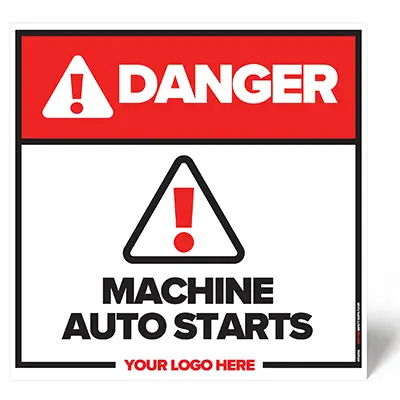
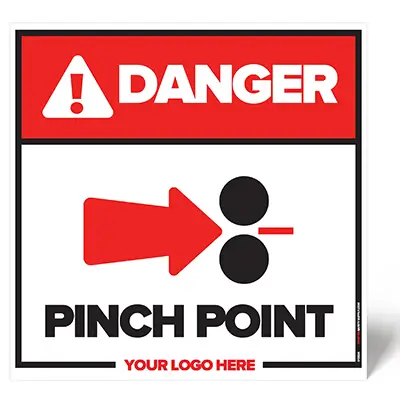
Hand Hazard Signs Built for Machines.
Not for Wishful Thinking.

CHOOSE FROM UP TO 10 SIZES

CHOOSE FROM UP TO 10 MATERIALS

BRAND YOUR SIGN WITH YOUR LOGO

BOLD SAFETY SIGNS THAT SAVE LIVES

SIGNS THAT BUILD A SAFE WORKPLACE
Our Hand Hazard Sign Gallery
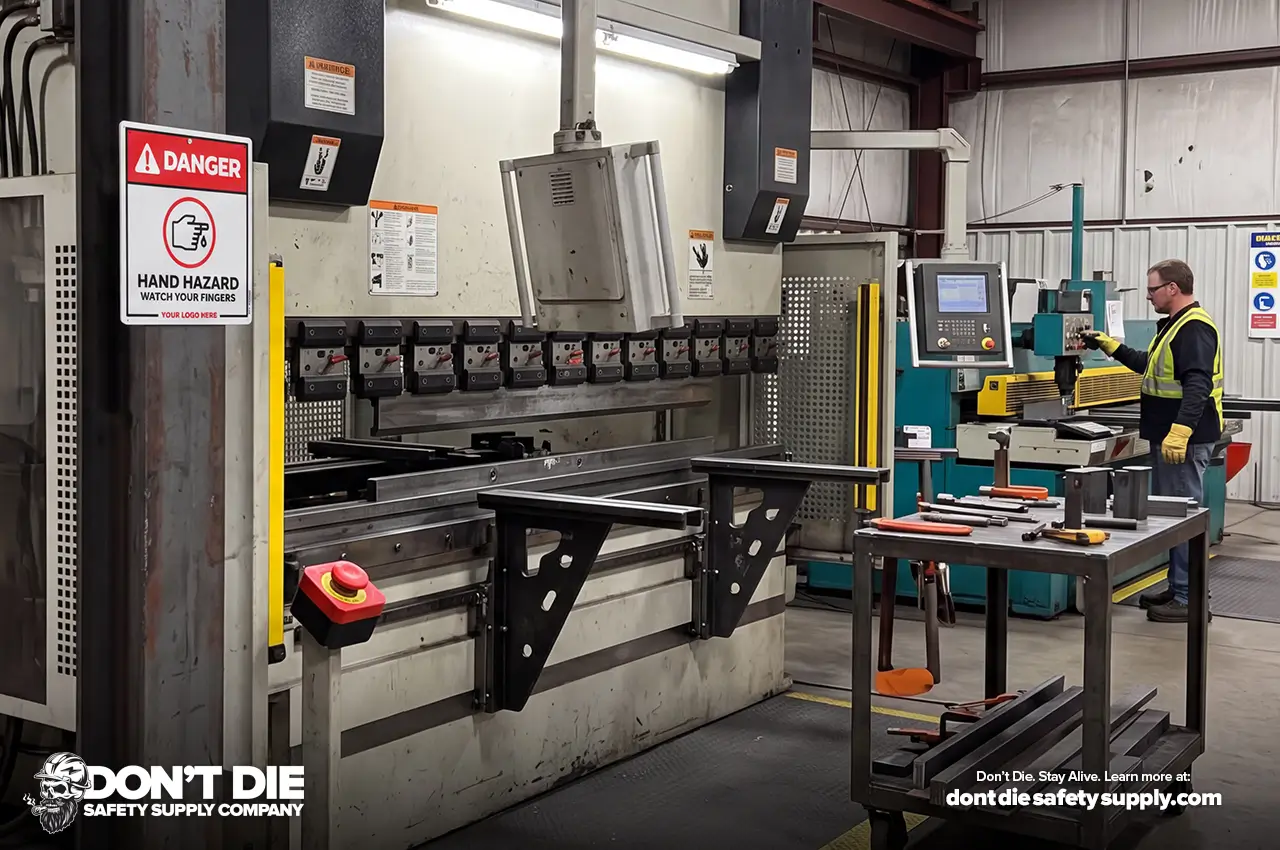
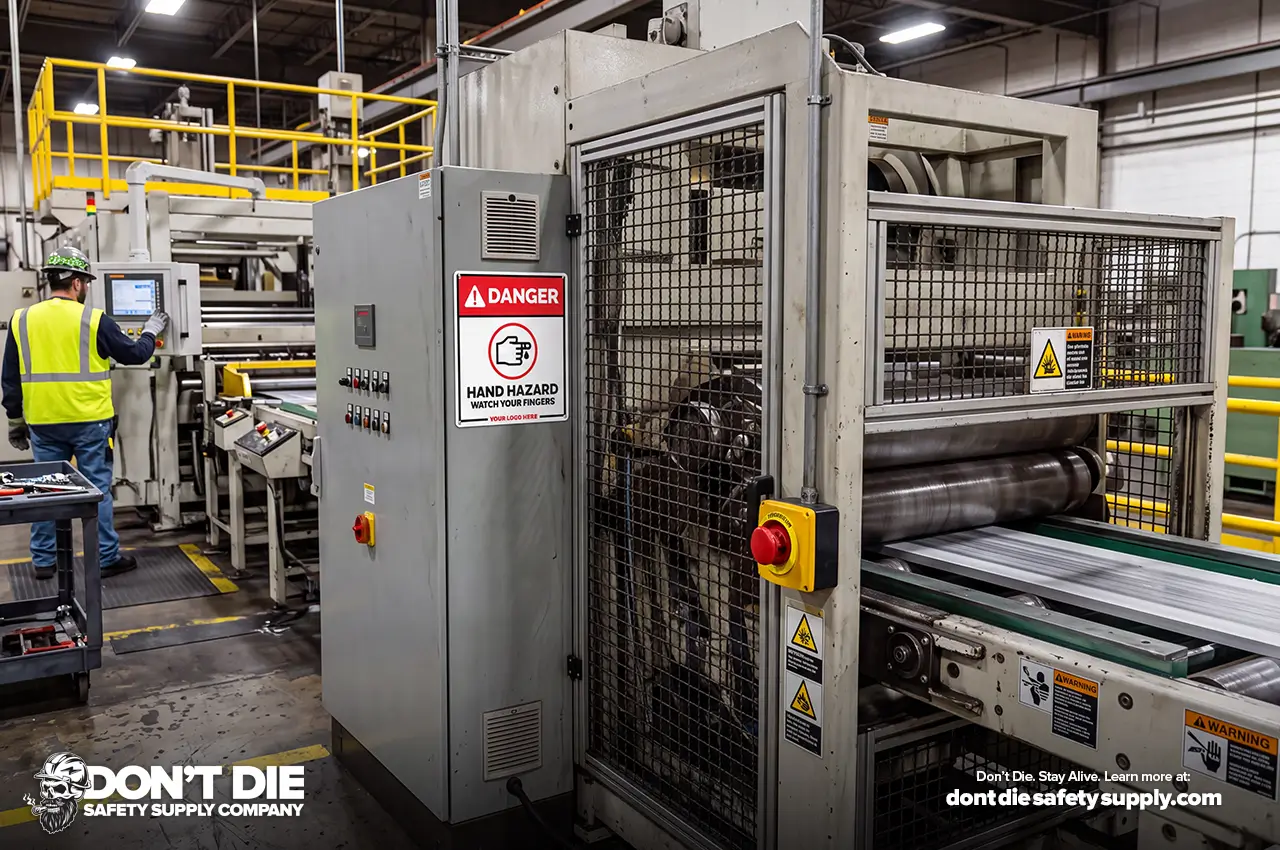
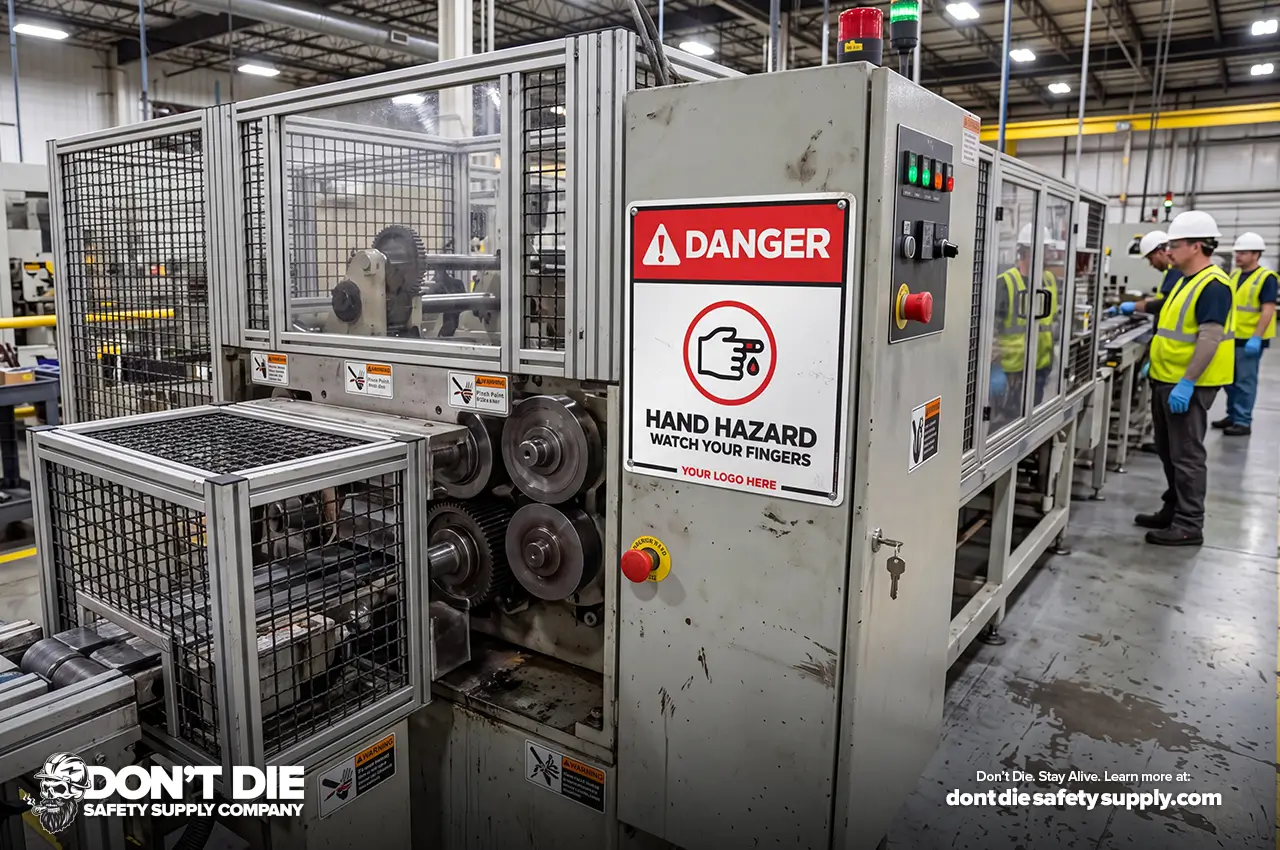
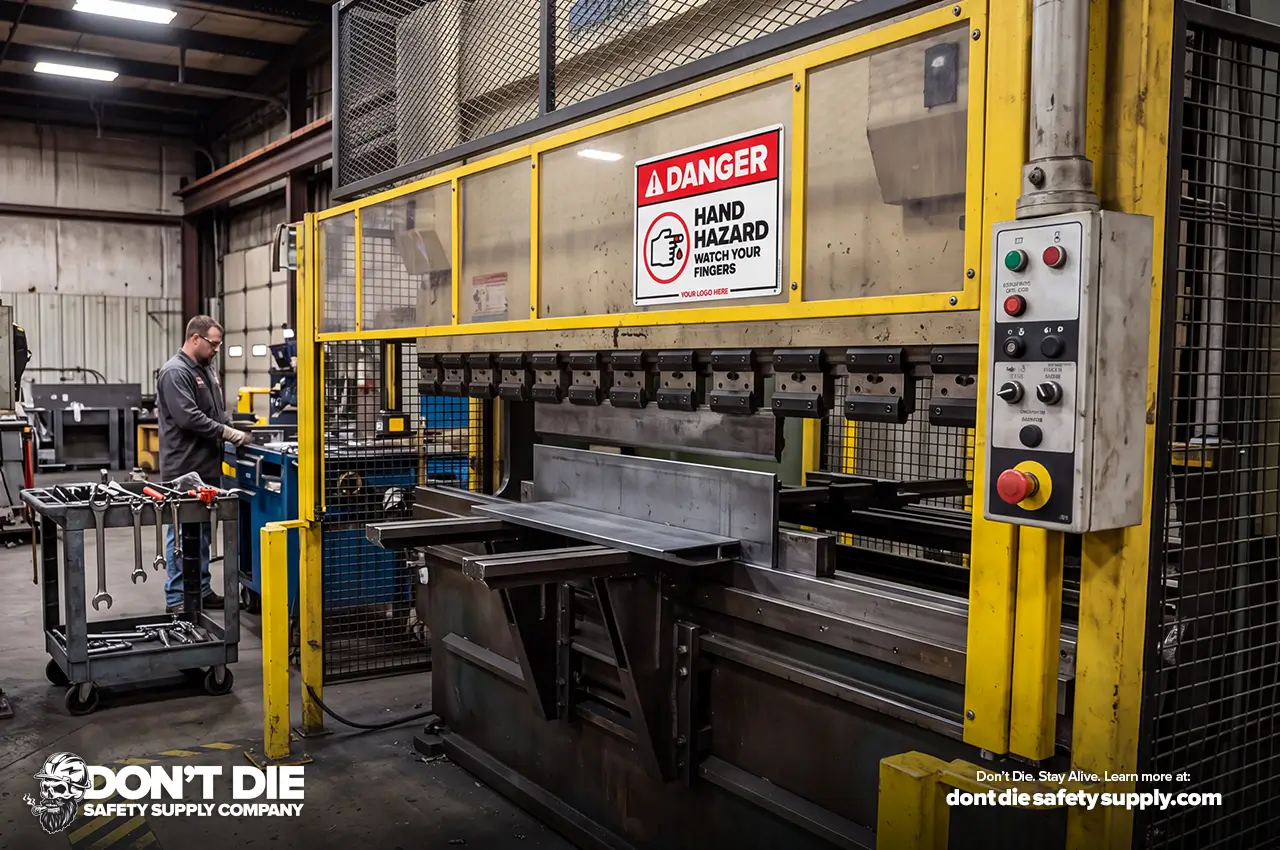
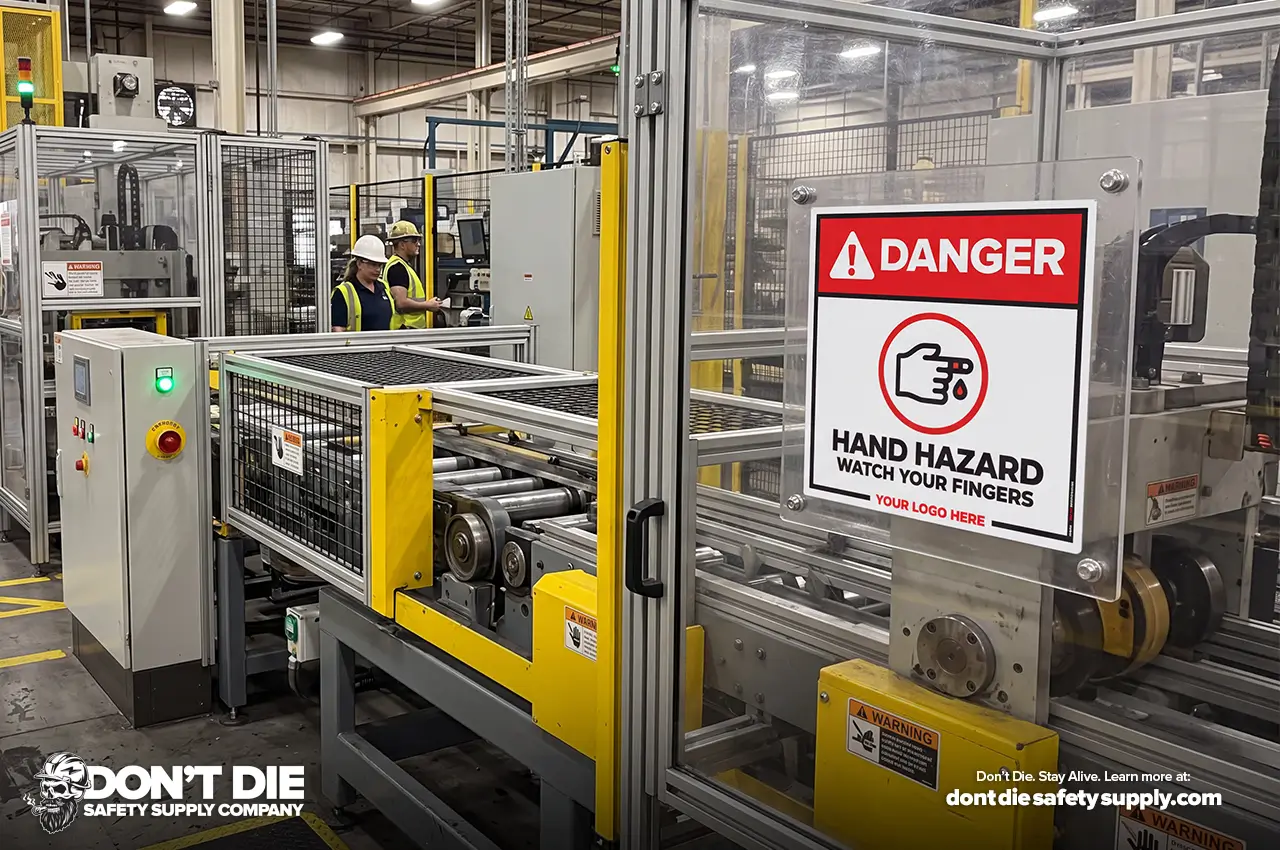
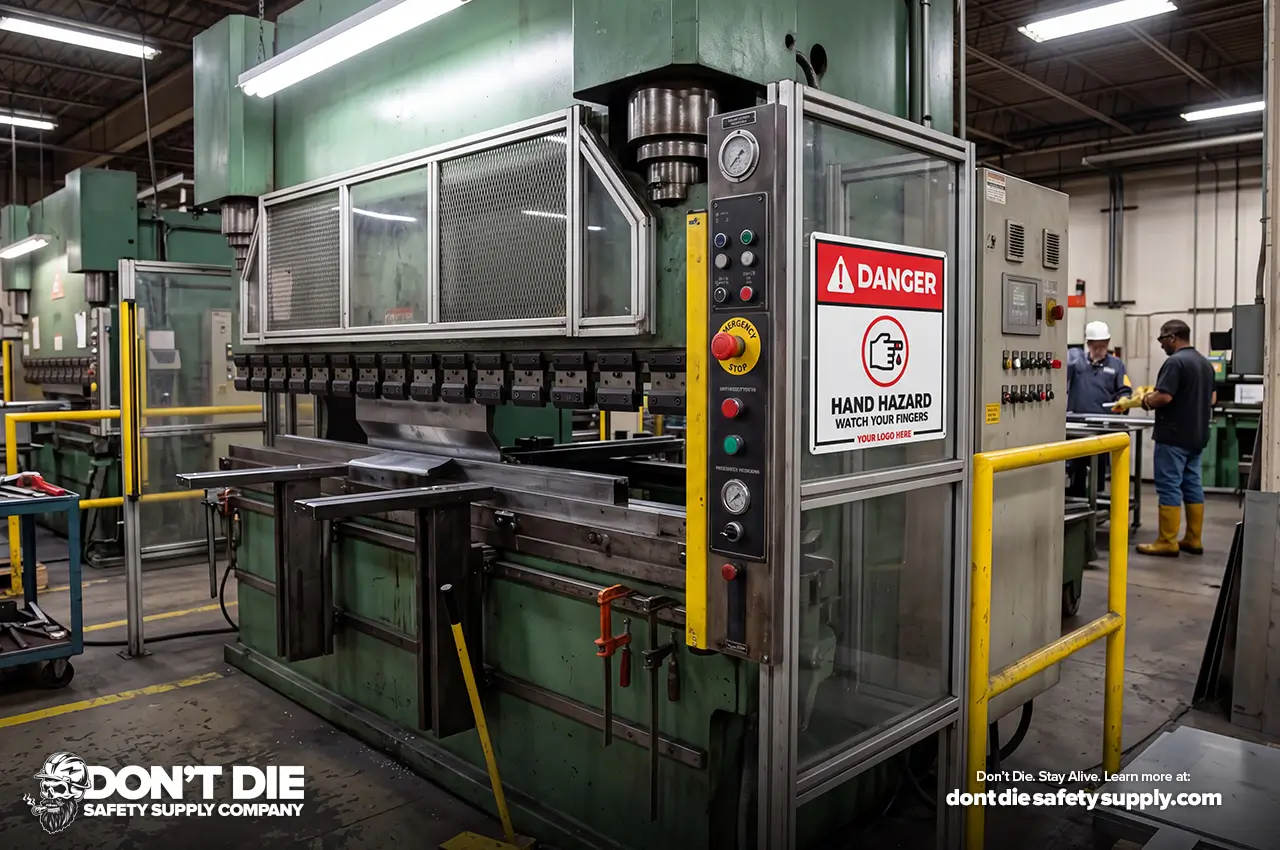
Hand Hazard Sign FAQs: What to Know Before Somebody Volunteers Their Fingers.
Hand Hazard Signs should warn people before hands get anywhere near rollers, pinch points, cutters or moving parts. This FAQ covers materials, sizing, wording and where these signs work best. We’ll break down aluminum, PVC and coroplast options, plus the practical details that matter — visibility, durability and placement — because machine guarding works a lot better when the warning shows up before the bad idea.
What makes Don’t Die Safety Supply’s Hand Hazard Signs better than cheap ones online?
Cheap Hand Hazard Signs look fine online — right up until grease, impacts, dust, washdowns and daily abuse turn them into background noise. We print with durable UV inks on aluminum, coroplast or PVC so the warning stays clear in plants, warehouses and machinery areas. These signs do more than look compliant. They help keep hands out of places where they definitely do not belong.
How long do your Hand Hazard Signs last in demanding workplaces?
Lifespan depends on the material, the installation and how rough the area is. Aluminum is the best option for demanding or long-term use. Coroplast works well for temporary controls. PVC is a solid choice for indoor or protected areas. UV-resistant inks help every sign stay readable, but impacts, vibration and careless humans eventually beat up everything.
What’s the turnaround time for Hand Hazard Signs?
Most Hand Hazard Sign orders ship within a few business days. Larger or customized orders may take longer, and we confirm timing before printing. Production starts after artwork approval so the wording, colours and logo are right before your signs hit the press. Need help? Email our sign team.
Which wording should I use for a Hand Hazard Sign?
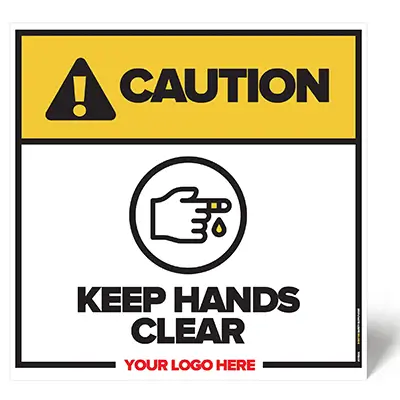
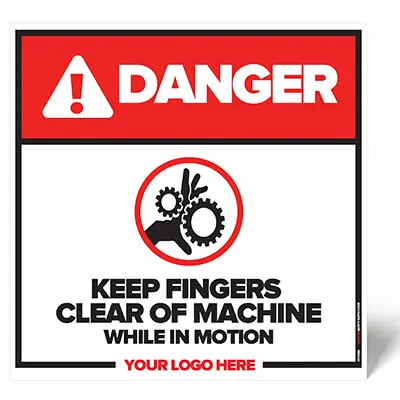
Use wording that matches the actual risk. “Hand Hazard” works as a broad warning. “Keep Hands Clear,” “Keep Fingers Clear,” “Pinch Point” or “Starts Automatically” may be better for specific equipment. The goal is simple: tell people what can hurt them and what not to do before they get close enough to regret it.
Where should Hand Hazard Signs be installed?
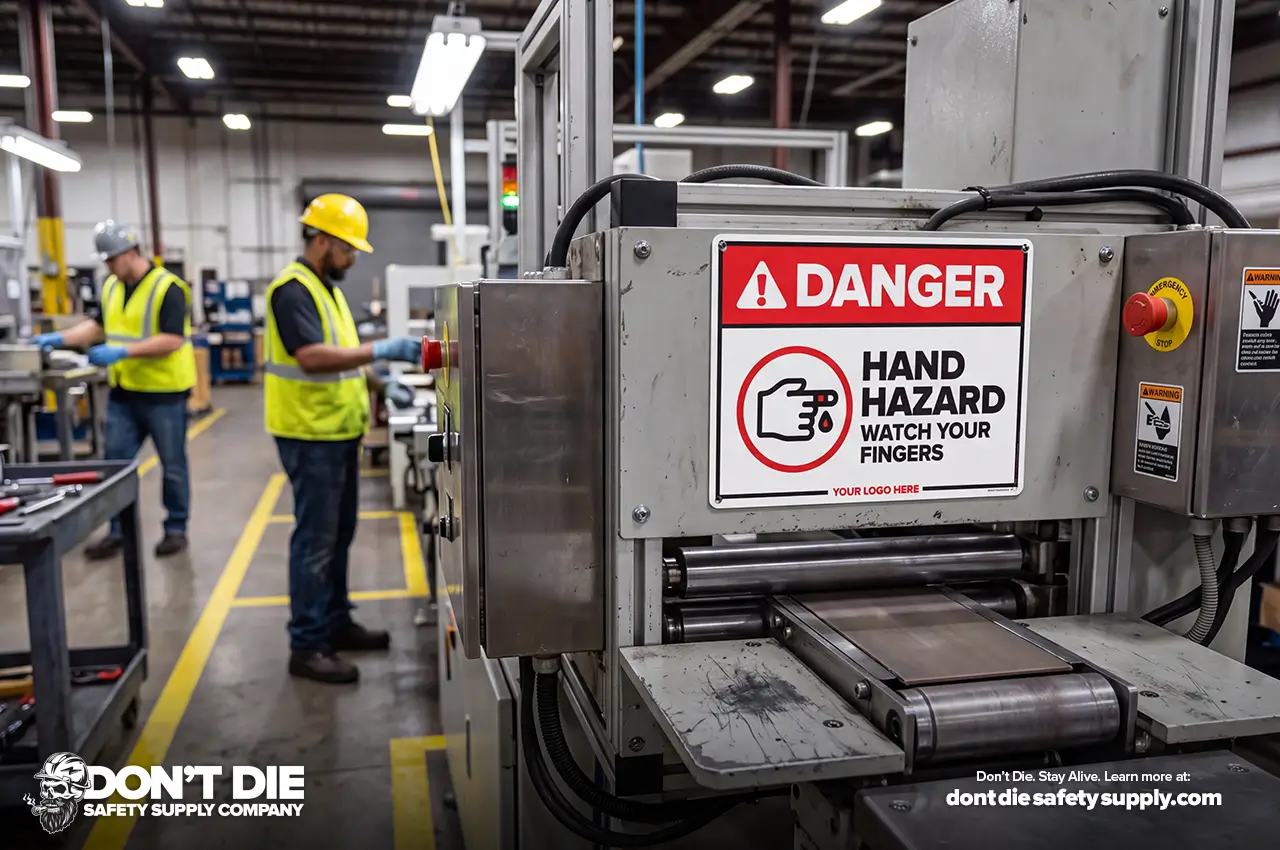
Mount the sign where the decision happens, not ten feet after the danger zone. Good locations include machine guards, access doors, control panels, conveyor approaches, roller lines, press areas, maintenance points and any approach where hands can be caught, cut, crushed or pulled in. If workers normally look there before reaching in, that is where the sign belongs.
What are Don’t Die Safety Supply’s Hand Hazard Signs made from?
We print Hand Hazard Signs on heavy-duty aluminum, flexible coroplast and solid PVC. Aluminum handles permanent or demanding locations. Coroplast suits temporary areas and changing layouts, while PVC is a clean, rigid choice for indoor or protected installations. Choose the material based on where the sign will live and how much abuse it must take. Learn more about our sign materials.
Can I customise the size, colour or wording on Hand Hazard Signs?
Yes. Change the size, colour, wording and layout to suit the equipment, hazard zone or site standard. Add machine numbers, shutdown reminders, lockout instructions or a company logo at no charge. We can help keep the design clean, loud and easy to understand. Your logo? Free. Need different wording on one of our signs? Also free. Need a completely custom design, new artwork, or a unique layout? We’ll quote that separately. Need help preparing files? Email our artwork team.
Can I order one Hand Hazard Sign or do you have minimums?
You can order one fully customized Hand Hazard Sign. We do not force minimum quantities because sometimes one machine, one guard or one pinch point is the whole problem. Every order receives the same proofing, printing and production care whether you need one sign, a matching machine set or enough to mark an entire production floor.
Where are your Hand Hazard Signs made?
Our Hand Hazard Signs are designed and printed in Canada at production locations in the Greater Toronto Area. Local production helps us monitor quality, maintain reliable turnaround times and check every sign before it ships. Your order is produced by people who understand Canadian facilities and industrial workplaces. No mystery factory — just Canadian production for Canadian workplaces.
Do Hand Hazard Signs replace guards, lockout procedures or training?
No. A Hand Hazard Sign reinforces the warning, but it does not replace machine guarding, lockout procedures, maintenance controls, supervision, training or any legal requirement that applies to the equipment. Use signage as one visible part of the safety system, then make sure the actual controls do the heavy lifting. A warning sign cannot stop a machine by itself.
Put the Warning Where the Bad Decision Starts.
Not sure which Hand Hazard Sign fits your workplace? Tell us the size, material, mounting location, wording or what you need marked — roller equipment, press brake, conveyor, guarded machine, pinch point, moving parts or a specific access area — and we’ll point you toward the sign that makes the hazard obvious. Real answers, no bots, no corporate fluff — just print-ready Hand Hazard Signs built to warn people before the machine gets a chance to.
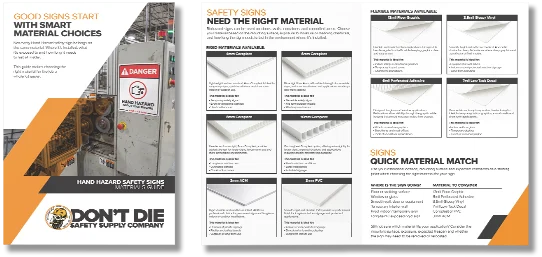
Download Our Guide to Choose the Right Material for Your Hand Hazard Sign
You need Hand Hazard Signs that stay visible when the production floor gets loud, busy or rushed. Every sign we print is built to mark machine hazards, moving parts and pinch zones while standing up to daily traffic and abuse. No fluff, no crap — just signs that make bad hand placement harder to excuse.
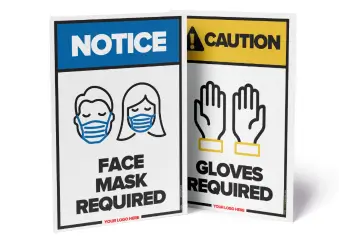
Personal Protection (PPE) Safety Signs
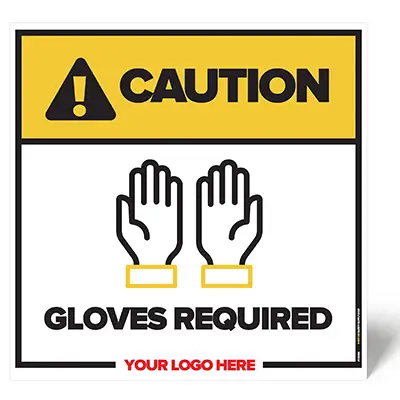
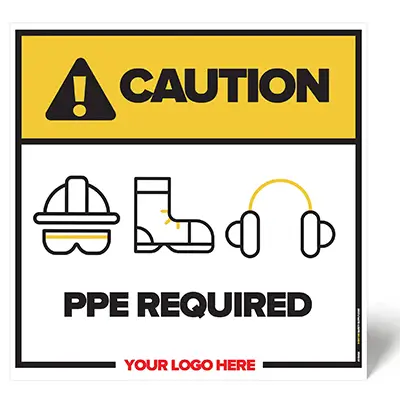
From gloves to face protection to full PPE reminders, our PPE signs make it clear what needs to be worn before people get too close to the bad part of the job.
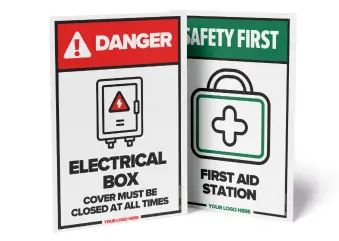
Work Site Safety Signs
Moving parts, restricted zones, service points and production hazards — our worksite safety signs cut through the noise and keep danger front and center. Built tough, designed loud, impossible to ignore.
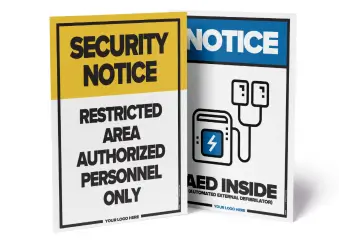
Facility Safety Signs
Warehouses, plants and production areas need clear direction. Our facility safety signs keep hazards marked, traffic moving and confusion from wandering into equipment it has no business near.